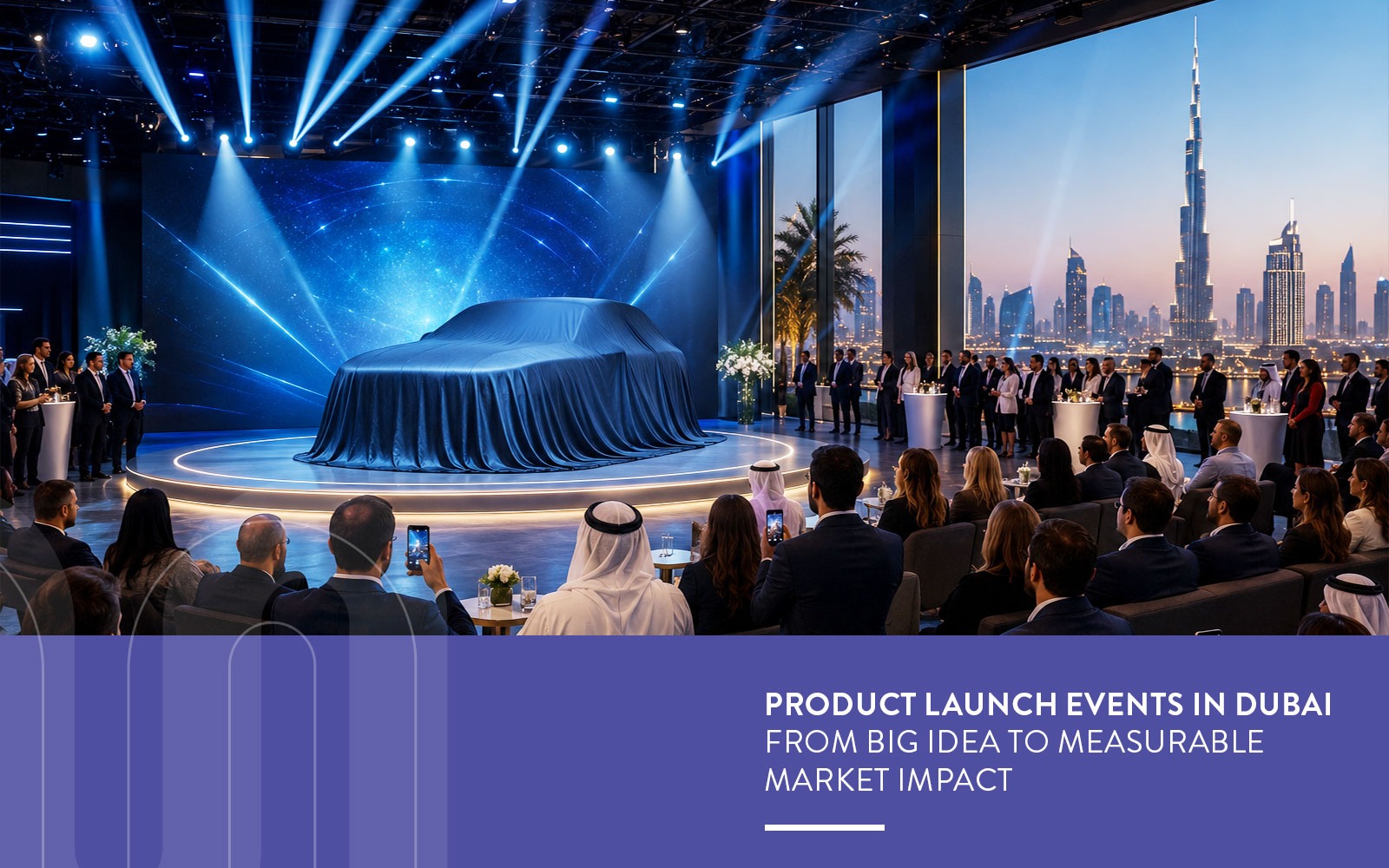
فعاليات إطلاق المنتجات في دبي
يبدأ تخطيط فعالية إطلاق منتج في دبي من الهدف التجاري للمنتج، لا من مكان الفعالية. خطة الإطلاق القوية تحدد الجمهور، ورسالة المنتج، وتجربة العرض التوضيحي، والبيئة الحاملة للهوية، والمحتوى المرئي، والمتابعة بعد الفعالية قبل أن يبدأ الإنتاج. بهذا تتحول فعالية الإطلاق إلى أثر ملموس في السوق.
عندما تخطط شركة لإطلاق منتج في دبي، فالسؤال الأول ليس أين سيقام الإطلاق فقط، بل ما الذي يجب أن يحققه الإطلاق للمنتج وللعلامة التجارية وللسوق. التخطيط الفعّال يربط الفكرة الكبيرة بتوقعات الجمهور وقيمة المنتج والهوية ومحتوى الفيديو والإنتاج والمطبوعات ولحظات العلاقات العامة والمتابعة. وللشركات التي تطلق منتجاتها في الإمارات، تساعد نقش ميديا في تحويل موجز الفعالية إلى تجربة إطلاق مركّزة تخدم الأهداف التجارية والاتصالية.
كيف تخطط لفعالية إطلاق منتج في دبي؟
ابدأ بتحديد هدف الإطلاق، والجمهور المستهدف، ورسالة المنتج، وتجربة العرض التوضيحي، والنتائج القابلة للقياس. ثم وحّد فكرة الفعالية والهوية والصوت والصورة وتصميم المسرح ومحتوى الفيديو والمطبوعات ورحلة الضيف ولحظات العلاقات العامة وجمع بيانات العملاء المحتملين والمتابعة، قبل بدء الإنتاج.
يجب أن تغطي خطة الإطلاق العملية ما يلي:
- الهدف التجاري من الإطلاق.
- الجمهور الذي يجب أن يفهم المنتج أو يجربه أو يثق به أو يروّج له.
- القيمة الأساسية للمنتج والرسائل الرئيسية.
- مسار عرض توضيحي يُظهر القيمة بوضوح.
- إبداع حملة الإطلاق في الدعوات والمسرح والشاشات والمطبوعات ومواد المتابعة.
- متطلبات الفيديو والتصوير قبل الإطلاق وخلاله وبعده.
- رحلة ضيف تدعم الانتباه والفهم والتفاعل والمتابعة.
- عرض مخصص مبني على النطاق والجمهور والجدول الزمني ومتطلبات المكان والميزانية.
بهذا لا يبقى الإطلاق مجرد إعلان، بل يصبح تجربة دخول إلى السوق تحمل هوية العلامة، مصممة لتوصيل القيمة ودعم محادثات المبيعات والعلاقات العامة، وإنتاج محتوى مفيد بعد الفعالية.
عندما يصبح إطلاق المنتج قراراً تجارياً لا مجرد فعالية
فعالية إطلاق المنتج ليست لحظة كشف فقط، بل تجربة دخول إلى السوق تحمل هوية العلامة. في دبي والإمارات، تخاطب فعاليات الإطلاق غالباً عدة جماهير في الوقت نفسه: العملاء والشركاء والموزعين ووسائل الإعلام والمستثمرين والمؤثرين والفرق الداخلية وأصحاب المصلحة في القطاع. وكل فئة قد تحتاج إلى سبب مختلف للانتباه والثقة واتخاذ الخطوة التالية.
الإطلاق المخطط جيداً يدعم الوعي بالسوق، وتثقيف الجمهور بالمنتج، وتوليد العملاء المحتملين، وإشراك الشركاء، والظهور الإعلامي، وتمكين فرق المبيعات، وتموضع العلامة، وبناء الثقة. فهو يمنح الشركة بيئة مضبوطة لتشرح لماذا يهم المنتج، وكيف يعمل، ومن يخدم، وما الذي يميزه.
على سبيل المثال، قد تحتاج شركة تقنية إلى محطات عرض توضيحي وشروحات تقنية وعروض تقديمية للقيادات وفيديوهات قصيرة للمتابعة. وقد تحتاج علامة استهلاكية إلى مناطق تجربة حسية وسرد بصري ومساحات مناسبة للمؤثرين وعرض للتغليف ومحتوى تشويقي لوسائل التواصل. أما علامات العقارات والضيافة والسيارات والرعاية الصحية فقد تحتاج إلى رحلة ضيف أكثر فخامة وإدارة أدق لأصحاب المصلحة ولحظات إعلامية ومحتوى منتج باحتراف.
يجب أن يتبع شكل الفعالية الغرض التجاري للمنتج. فإذا لم يكن هدف الإطلاق واضحاً، قد تبدو الفعالية جذابة لكنها تفشل في شرح قيمة المنتج أو دعم الخطوة التجارية التالية.
لماذا يجب أن تقود قيمة المنتج تخطيط الإطلاق؟
لأن قيمة المنتج تؤثر في كل قرار في الفعالية. قبل اختيار المكان أو تصميم المسرح أو إنتاج فيديو الإطلاق أو طباعة الكتيبات، يجب أن تحدد الشركة ما الذي يجب أن يفهمه الجمهور عن المنتج.
أهداف المنتج تؤثر في اختيار المكان، ومزيج الجمهور، ومسار العرض التوضيحي، وتصميم المسرح، وهيكل الكلمة الرئيسية، والهوية البصرية، ومتطلبات الصوت والصورة، والمطبوعات، والفيديو، وتجربة الضيف، ومواد ما بعد الفعالية. إطلاق منتج فاخر قد يتطلب بيئة أكثر انضباطاً وتفاصيل بصرية أقوى ورحلة ضيف أهدأ. وإطلاق منصة برمجية قد يحتاج إلى شاشات ومحطات عرض ودعم تقني وشرح واضح. أما المنتج الاستهلاكي فقد يتطلب عينات ومناطق عرض وسرداً تجارياً ولحظات لوسائل التواصل.
كلما كان الموجز أقوى، سهل توحيد فكرة الإطلاق والعرض التوضيحي والهوية والإنتاج والمحتوى والمتابعة. فكل نقطة تواصل، من الدعوة إلى منطقة العرض إلى فيديو ما بعد الفعالية، تؤثر في كيفية تذكّر المنتج.
الإطلاق الناجح يساعد الشركة على التواصل بوضوح وإظهار القيمة وإبقاء الحديث عن المنتج حياً في السوق بعد الفعالية. التخطيط الاحترافي يقلل فجوات التنفيذ ويزيد وضوح الإطلاق، لكن النتائج تعتمد على المنتج والجمهور والعرض والجدول الزمني وظروف السوق وجودة التنفيذ.
ما الذي تجهزه قبل التواصل مع مزود خدمة الإطلاق؟
الموجز الواضح يساعد فريق الفعالية على فهم ما يجب أن يحققه الإطلاق قبل اقتراح الفكرة أو تجهيز المكان أو خطة الإنتاج أو اتجاه المحتوى. لا يلزم أن يكون الموجز مثالياً في المرحلة الأولى، لكن يجب أن يقدم سياقاً تجارياً وإبداعياً كافياً لعرض مفيد.
قبل إرسال موجز فعالية الإطلاق، جهّز:
- هدف الإطلاق.
- الجمهور المستهدف.
- القيمة الأساسية للمنتج.
- العدد المتوقع للحضور.
- شكل الإطلاق: كشف خاص، أو فعالية إعلامية، أو إطلاق للشركاء، أو فعالية عرض توضيحي، أو إطلاق بصيغة مؤتمر، أو إطلاق هجين.
- الرسائل الرئيسية.
- متطلبات العرض التوضيحي.
- التاريخ المفضل وخيارات المكان.
- نطاق الميزانية التقديري.
- قائمة المتحدثين.
- ملفات الهوية.
- متطلبات المسرح والصوت والصورة.
- متطلبات الطباعة واللافتات.
- احتياجات التصوير والفيديو.
- متطلبات العلاقات العامة والإعلام.
- مسار الاعتمادات.
- مؤشرات النجاح.
الأهداف والجمهور ومؤشرات النجاح
الجزء الأول من الموجز يحدد هدف الإطلاق: هل تسعى الشركة لبناء الوعي، أو تثقيف السوق، أو توليد عملاء محتملين، أو جذب اهتمام الإعلام، أو تمكين فرق المبيعات، أو تعزيز ثقة الشركاء، أو إعادة تموضع العلامة؟ كل هدف يحتاج إلى هيكل إطلاق مختلف.
ملف الجمهور لا يقل أهمية. فإطلاق موجّه للقيادات والشركاء والإعلام لا يُصمم بالطريقة نفسها لإطلاق موجّه لمشتري التجزئة أو الموزعين أو المؤثرين أو المستخدمين التقنيين. توقعات الجمهور تحدد الشكل والنبرة وعمق المحتوى وأسلوب العرض والتسجيل ومواد المتابعة.
ويجب تحديد مؤشرات النجاح قبل طلب العرض، ومنها: جودة الحضور، والعملاء المحتملون المؤهلون، وطلبات العروض التوضيحية، واجتماعات المبيعات المحجوزة، والتغطية الإعلامية، والمحتوى الملتقط لوسائل التواصل، وأداء فيديو ما بعد الفعالية، ومحادثات الشركاء، ونتائج الاستبيانات، وتوافق أصحاب المصلحة داخلياً.
مواد المنتج والجدول الزمني والاعتمادات
يتضمن إطلاق المنتج عناصر كثيرة: صور المنتج، وملفات الشعار، ودليل الهوية، ونصوص العرض التوضيحي، والعروض التقديمية، والمطبوعات، والتغليف، واللافتات، ومحتوى الشاشات، والفيديو، وملاحظات المتحدثين، والمواد الصحفية، ومحتوى التواصل الاجتماعي. إذا لم تُجهز هذه المواد مبكراً، يصبح الإنتاج والاعتماد صعبين مع اقتراب موعد الفعالية.
جدول الاعتمادات ضروري أيضاً؛ فقد تحتاج فرق التسويق والهوية والمنتج والمبيعات والشؤون القانونية والعلاقات العامة والمشتريات والإدارة العليا إلى اعتماد أجزاء مختلفة من الإطلاق. رسم هذا المسار مبكراً يقلل إعادة العمل ويحمي الجدول الزمني ويبقي الإنتاج والطباعة والصوت والصورة والمحتوى متوافقة.
قائمة تحقق لتخطيط فعالية إطلاق المنتج
- هدف الإطلاق: النتيجة التجارية الرئيسية المتوقعة. يُبقي الفعالية متوافقة مع أهداف السوق أو المبيعات أو العلاقات العامة أو العلامة. حدّد إن كان الهدف الوعي أو العملاء المحتملين أو إشراك الشركاء أو تمكين المبيعات أو الظهور الإعلامي.
- الجمهور المستهدف: نوع الحضور ومناصبهم وقطاعاتهم ولغتهم وتوقعاتهم. يحدد الرسالة وعمق العرض وطابع المكان ورحلة الضيف. قسّم العملاء والشركاء والإعلام والمؤثرين والقيادات والفرق الداخلية عند الحاجة.
- رسالة المنتج: القيمة الأساسية وأهم الأدلة. تساعد الضيوف على فهم أهمية المنتج. اجعل الرسالة بسيطة بما يكفي لتتكرر على المسرح والشاشات والمطبوعات والفيديو.
- تجربة العرض التوضيحي: كيف سيرى الضيوف المنتج أو يجربونه. تحوّل الإطلاق من كشف سلبي إلى تجربة تفاعلية. جهّز نصوص العرض ومحطات المنتج وأدوار الدعم وخطط الطوارئ.
- متطلبات المكان: السعة وسهولة الوصول والتخطيط والجاهزية التقنية وملاءمة الهوية. تؤثر في الإنتاج وراحة الضيوف وانطباعهم. اختر المكان وفق أهداف المنتج وتجربة الجمهور لا الموقع فقط.
- المسرح والصوت والصورة: الشاشات والصوت والإضاءة والميكروفونات والتشغيل والبث المباشر والدعم التقني. تدعم وضوح الرسالة ولحظة الكشف وتفاعل الجمهور. أكّد المواصفات والبروفات وخطط الطوارئ مبكراً.
- هوية الإطلاق: الهوية البصرية وتصميم المسرح ورسومات الشاشات واللافتات ونقاط تواصل الضيوف. تصنع بيئة إطلاق متسقة. وحّد إبداع الإطلاق مع دليل الهوية وتموضع المنتج.
- المطبوعات: الكتيبات والدعوات وبطاقات البرنامج واللافتات ونشرات المنتج والبطاقات التعريفية ووحدات العرض. تدعم فهم المنتج وتذكّره. خطط للمقاسات والخامات والكميات ومواعيد الاعتماد قبل الإنتاج.
- محتوى الفيديو: فيديو الإطلاق وفيديو العرض التوضيحي ومحتوى شاشات LED والمقابلات والملخصات. يشرح القيمة ويمد عمر الإطلاق. حدّد المخرجات قبل يوم التصوير أو الفعالية.
- لحظة العلاقات العامة: الزاوية الإعلامية ولحظة الكشف والمتحدث الرسمي وفرص التصوير والمواد الصحفية. تدعم الظهور وثقة أصحاب المصلحة. نسّق احتياجات الإعلام مع تسلسل المسرح والتصوير.
- رحلة الضيف: الدعوة والوصول والتسجيل والجلوس والعرض والتواصل والمغادرة والمتابعة. تحسن الراحة والتفاعل وتذكّر العلامة. امشِ في الفعالية من وجهة نظر الضيف.
- جمع بيانات العملاء المحتملين: النماذج ورموز QR ونظام CRM وطلبات العروض وحجز الاجتماعات ومسؤولية المتابعة. يربط التفاعل في الفعالية بتطوير الأعمال. اجعل جمع البيانات بسيطاً ومفيداً للمبيعات والتسويق.
- المتابعة بعد الفعالية: الرسائل وفيديو الملخص والصور ومواد المبيعات ومحتوى العلاقات العامة والتقارير والخطوات التالية. تمد قيمة الإطلاق إلى ما بعد يوم الفعالية. جهّز محتوى المتابعة ومسؤولياته قبل الإطلاق.
أخطاء شائعة تُضعف أثر الإطلاق
تفقد كثير من فعاليات الإطلاق أثرها لأن التخطيط يبدأ بالتصميم قبل وضوح الهدف التجاري. التصميم الإبداعي مهم، لكنه يجب أن يخدم رسالة الإطلاق وتجربة العرض وتوقعات الجمهور ومسار المتابعة.
من الأخطاء الشائعة:
- البدء بالتصميم قبل تحديد هدف الإطلاق.
- التعامل مع الإطلاق كفعالية ليوم واحد فقط.
- ضعف التوافق بين الهوية والعرض التوضيحي والطباعة والفيديو.
- تأخر الاعتمادات الداخلية لتصاميم المسرح أو محتوى المنتج أو المطبوعات أو الفيديو.
- غياب مسار واضح للعرض التوضيحي.
- تحميل الإطلاق برسائل كثيرة.
- إهمال محتوى ما بعد الفعالية.
- اختيار المزودين على أساس السعر فقط.
- عدم تحديد نتائج قابلة للقياس.
- تأخر تجهيز مواد الإطلاق.
- صنع لحظة كشف دون خطة متابعة قوية.
- استخدام مطبوعات عامة لا تخدم إبداع الحملة.
- عدم إطلاع المتحدثين وفرق المبيعات على رسالة المنتج.
- عدم تجهيز متطلبات الإعلام والعلاقات العامة والتصوير قبل يوم الفعالية.
يجب أن تجعل فعالية الإطلاق المنتج أسهل فهماً وأسهل تذكراً. فإذا لم يترابط العرض والهوية والمحتوى والمتابعة، قد تحقق الفعالية انتباهاً مؤقتاً بأثر محدود في السوق.
كيف تشكّل الهوية والفيديو تجربة إطلاق المنتج؟
تلعب الهوية والفيديو دوراً محورياً في فهم الضيوف للإطلاق. يجب أن يساعد النظام البصري الجمهور على التعرف على العلامة وفهم قيمة المنتج وتذكّر رسالة الإطلاق بعد الفعالية.
أهم نقاط الهوية والفيديو:
- خلفية المسرح.
- تصاميم الإطلاق.
- مناطق العرض التوضيحي.
- محتوى شاشات LED.
- قوالب العروض التقديمية.
- الكتيبات المطبوعة.
- وحدات عرض المنتج.
- تصميم الدعوات.
- المحتوى التشويقي لوسائل التواصل.
- فيديو الإطلاق.
- فيديو ملخص ما بعد الفعالية.
يجب أن تبدو حملة الإطلاق متسقة من أول دعوة حتى آخر مادة متابعة. والشركات التي تحتاج إلى توجه إبداعي أقوى يمكنها ربط هوية الإطلاق بـخدمات الهوية التجارية في دبي، لتعمل تصاميم الفعالية ورسالة المنتج والعروض التقديمية والمحتوى معاً.
الفيديو مفيد بشكل خاص لأنه يبسّط شرح المنتج ويدعم لحظة الكشف ويمنح الشركة محتوى تستخدمه بعد الفعالية. الفيديوهات القصيرة ومقاطع العرض ومقابلات القيادات وردود فعل العملاء والملخصات تُبقي الحديث عن المنتج مستمراً بعد يوم الإطلاق.
لماذا يجب تخطيط الطباعة والفيديو والإنتاج معاً؟
إبداع حملة الإطلاق ليس خطوة أخيرة منفصلة. يجب تنسيق الطباعة والفيديو والإنتاج من البداية لأنها جميعاً تشكّل تجربة الضيف نفسها. وإذا خُطط لها منفصلة، قد يبدو الإطلاق مشتتاً أو يحتاج إلى تصحيحات في اللحظة الأخيرة.
يجب تنسيق هذه العناصر مع:
- تخطيط المكان.
- أبعاد المسرح.
- مناطق عرض المنتج.
- مواقع الشاشات.
- أماكن اللافتات.
- محطات العرض التوضيحي.
- توزيع الكتيبات.
- مناطق الإعلام.
- رحلة الضيف.
- مواد ما بعد الفعالية.
فإذا كانت منطقة العرض التوضيحي محور الإطلاق، يجب أن تدعم نشرات المنتج المطبوعة هذا التفاعل. وإذا كانت لحظة الكشف على المسرح هي لحظة العلاقات العامة الرئيسية، فيجب توحيد محتوى شاشات LED والإضاءة واللافتات ومواقع التصوير والفيديو. تنسيق خدمات الطباعة في دبي مع الفيديو والإنتاج يجعل الإطلاق أكثر اتساقاً ويقلل التعديلات قرب موعد الفعالية.
كيف تربط نقش ميديا الاستراتيجية بالإبداع والتنفيذ؟
يتطلب تخطيط فعالية إطلاق منتج في دبي أن تعمل الاستراتيجية والفكرة الإبداعية وإدارة الفعاليات والهوية والطباعة والفيديو والإنتاج والتنفيذ ومواد ما بعد الفعالية كنظام واحد. وعندما تُدار هذه العناصر منفصلة دون اتجاه مشترك، يفقد الإطلاق وضوحه.
تساعد نقش ميديا الشركات بمراجعة موجز الإطلاق وفهم السياق التجاري وتحديد اتجاه إبداعي يخدم أهداف المنتج في السوق. ويشمل ذلك مواءمة هوية الإطلاق مع الأهداف التجارية، وتنسيق الطباعة ومواد الإطلاق، ودعم إنتاج الفعالية وتجهيزها، والحفاظ على الاتساق البصري، وتحسين رحلة الضيف.
وحسب نطاق الإطلاق، يمكن للفريق دعم محتوى الفيديو والتصوير عند الحاجة، مثل فيديوهات الإطلاق وتغطية العروض والملخصات والمقابلات ومقاطع وسائل التواصل ومواد المتابعة للمبيعات والعلاقات العامة والتسويق.
وللشركات التي تبحث عن تخطيط مترابط بدلاً من مزودين منفصلين، يمكن لـخدمات إدارة الفعاليات في دبي من نقش ميديا تحويل الإطلاق إلى تجربة تحمل هوية العلامة وتربط الفكرة الكبيرة بالتنفيذ العملي.
خطوات طلب عرض مخصص لإطلاق منتجك
يُبنى عرض فعالية الإطلاق على موجز الإطلاق والجمهور ومتطلبات المكان واحتياجات العرض التوضيحي وأهداف العلامة والجدول الزمني والميزانية. وكلما كان الموجز أوضح، كانت الفكرة والنطاق وخطة الإنتاج واتجاه المحتوى أدق.
- شارك المنتج وهدف الإطلاق والسياق التجاري.
- حدّد الجمهور المستهدف والعدد المتوقع للحضور.
- شارك التاريخ المفضل والموقع أو خيارات المكان.
- أرسل ملفات الهوية وصور المنتج والرسائل الرئيسية.
- وضّح متطلبات الطباعة والفيديو والعرض التوضيحي والإنتاج.
- دع الفريق يراجع الموجز والنطاق.
- استلم عرضاً مخصصاً متوافقاً مع أهداف السوق والجدول الزمني والميزانية.
إذا كنت تجهز لإطلاق منتج في دبي أو الإمارات، يمكنك التواصل مع نقش ميديا لمشاركة موجز الفعالية وطلب عرض مخصص مبني على جمهورك ورسالة منتجك وإبداع الحملة واحتياجات الإنتاج وأهداف السوق.
أسئلة شائعة عن تخطيط فعاليات إطلاق المنتجات في دبي
ما الخطوة الأولى في تخطيط فعالية إطلاق منتج في دبي؟
الخطوة الأولى هي تحديد هدف الإطلاق. قبل اختيار المكان أو تصميم المرئيات، وضّح ما يجب أن يحققه المنتج في السوق، ومن يجب أن يفهمه، وما الرسالة التي يجب أن تبقى في الذاكرة، وكيف سيُقاس النجاح بعد الفعالية.
متى يجب أن تبدأ الشركة التخطيط لفعالية الإطلاق؟
يعتمد التوقيت على حجم الإطلاق والمكان واحتياجات الإنتاج والاعتمادات والفيديو والطباعة ومتطلبات العلاقات العامة. تستفيد معظم فعاليات الإطلاق من البدء قبل عدة أشهر، خاصة عندما تشمل محطات عرض وبيئات تحمل الهوية وإنتاج مسرح وشاشات LED ولحظات إعلامية ومطبوعات ومحتوى لما بعد الفعالية.
ماذا يجب أن يتضمن موجز فعالية الإطلاق؟
هدف الإطلاق، والجمهور المستهدف، وقيمة المنتج، والعدد المتوقع للحضور، وشكل الإطلاق، والرسائل الرئيسية، ومتطلبات العرض التوضيحي، والتاريخ المفضل، وخيارات المكان، ونطاق الميزانية، وقائمة المتحدثين، وملفات الهوية، واحتياجات الصوت والصورة، ومتطلبات الطباعة والفيديو والعلاقات العامة، ومسار الاعتمادات، ومؤشرات النجاح.
لماذا يعد تخطيط العرض التوضيحي للمنتج مهماً؟
لأن الجمهور يحتاج إلى فهم قيمة المنتج بوضوح وسرعة. مسار العرض الجيد يُظهر المشكلة والحل وحالة الاستخدام والفائدة دون إرباك، ويساعد المتحدثين وفرق المبيعات والإعلاميين والشركاء على شرح المنتج بشكل متسق بعد الفعالية.
كيف تدعم فعالية الإطلاق الأثر في السوق؟
بجذب الانتباه، وتوصيل القيمة، وبناء الثقة، وإنتاج المحتوى، وفتح محادثات المبيعات، ودعم المتابعة بعد الفعالية. وعندما تتوافق فكرة الإطلاق والعرض والهوية والفيديو والطباعة ورحلة الضيف ولحظات العلاقات العامة، تستمر الفعالية في صنع القيمة بعد يوم الإطلاق.
ما الأخطاء التي تضعف نتائج فعالية الإطلاق؟
التركيز على المكان أو التصميم فقط، وتأخير الاعتمادات، وتحميل الفعالية برسائل كثيرة، وإهمال مسار العرض، ونسيان التقاط المحتوى، وعدم تجهيز مواد المتابعة. كما أن ضعف التوافق بين الهوية والفيديو والطباعة والإنتاج وأهداف المبيعات يقلل وضوح الإطلاق.
هل يجب تخطيط الهوية والطباعة والفيديو والإنتاج معاً؟
نعم، لأنها تشكّل تجربة الإطلاق نفسها. تصاميم المسرح ومحتوى الشاشات والكتيبات واللافتات ومناطق العرض والإضاءة والتصوير وفيديو ما بعد الفعالية كلها تؤثر في طريقة تقديم المنتج وتذكّره. التخطيط المنسق يحسن الاتساق ويقلل إعادة العمل.
كيف تدعم نقش ميديا تخطيط فعاليات إطلاق المنتجات في دبي؟
بمراجعة موجز الإطلاق، وتحديد الاتجاه الإبداعي، ومواءمة الهوية مع أهداف السوق، وتنسيق مطبوعات الإطلاق، ودعم إنتاج الفعالية، وتحسين رحلة الضيف، والمساعدة في إنتاج محتوى الفيديو والصور عند الحاجة للتسويق والمتابعة بعد الفعالية.
ابدأ التخطيط لإطلاق يصنع أثراً في السوق
التخطيط الفعّال لإطلاق المنتجات في دبي يربط الفكرة الكبيرة بأثر ملموس في السوق. فالإطلاق لا يعلن عن المنتج فحسب، بل يساعد الجمهور على فهم قيمته وتجربته بوضوح والثقة بالعلامة ومواصلة الحديث بعد الفعالية.
إذا كنت تخطط لفعالية إطلاق منتج في دبي، أرسل موجز فعاليتك إلى نقش ميديا واطلب عرضاً مخصصاً مبنياً على جمهورك ورسالة منتجك وإبداع حملة الإطلاق واحتياجات الإنتاج وأهداف السوق.