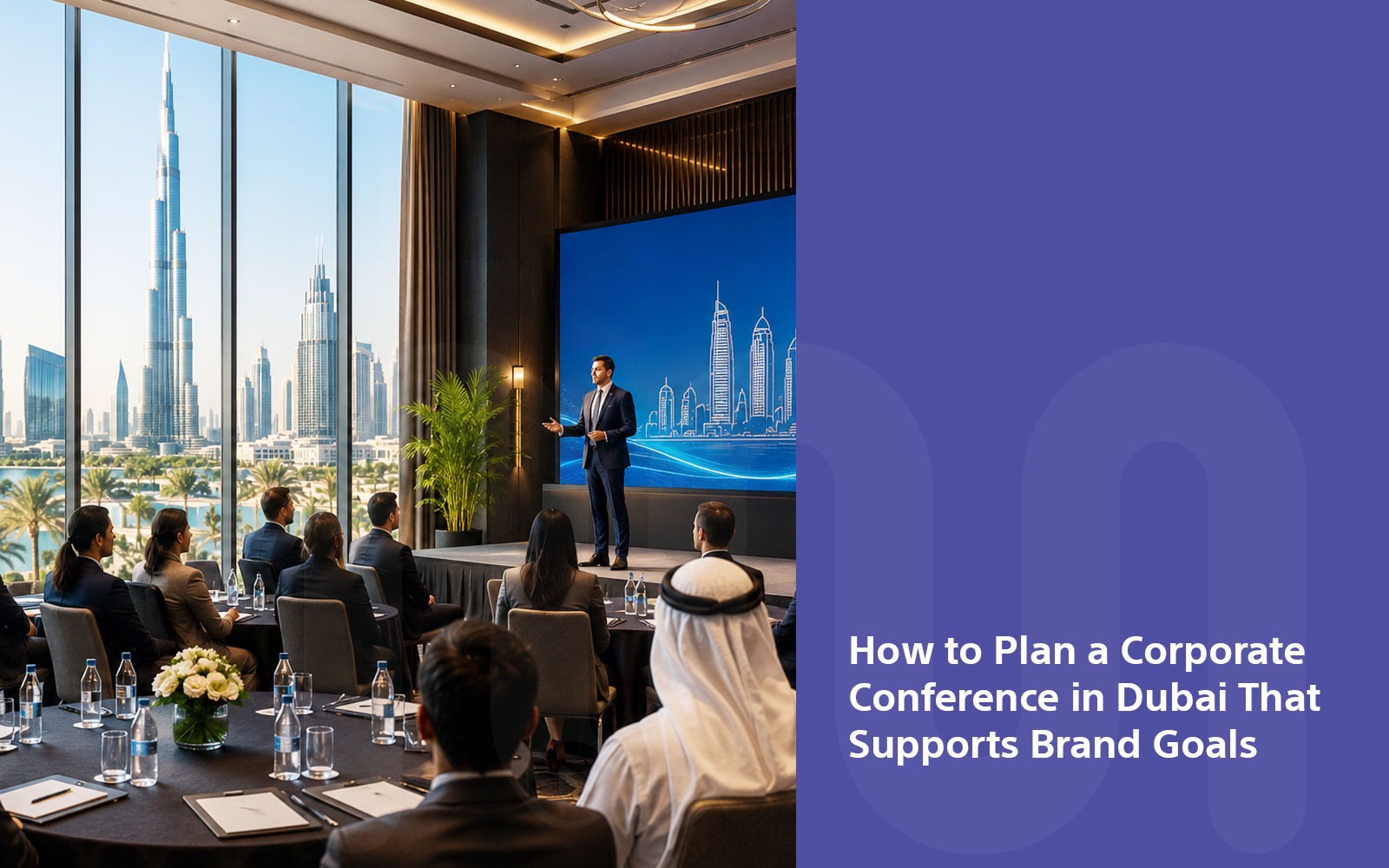
مؤتمرات الشركات في دبي
يبدأ تخطيط مؤتمرات الشركات في دبي من الأهداف التجارية، لا من اختيار المكان. خطة المؤتمر القوية تحدد الجمهور المستهدف، والرسائل الرئيسية، ورحلة الضيف، وهوية الفعالية، ومتطلبات الإنتاج، والمتابعة بعد الفعالية قبل بدء التنفيذ. هذا يجعل المؤتمر أسهل إدارة، وأكثر اتساقاً مع أهداف العلامة، وأكثر قيمة للحضور والقيادات والشركاء وفرق المبيعات.
عندما تخطط شركة لمؤتمر في دبي، فالسؤال الأول ليس أين ستقام الفعالية فقط، بل ما الذي يجب أن يحققه المؤتمر للعلامة التجارية. التخطيط الفعّال لمؤتمرات الشركات في دبي يربط الاستراتيجية والهوية والإنتاج والصوت والصورة والطباعة وتجربة الجمهور ومحتوى المتابعة في خطة واحدة واضحة. وللشركات التي تجهز لمؤتمر في الإمارات، تساعد نقش ميديا في تحويل موجز الفعالية إلى تجربة أعمال تحمل هوية العلامة ومصممة حول احتياجات الجمهور والأهداف التجارية.
كيف تخطط لمؤتمر شركات في دبي؟
ابدأ بتحديد الهدف التجاري والجمهور المستهدف والرسالة الرئيسية والنتائج المتوقعة. ثم خطط لرحلة الضيف، وشكل الفعالية، ومتطلبات المكان، وهوية المؤتمر، وتصميم المسرح، واحتياجات الصوت والصورة، وتسلسل المتحدثين، والمطبوعات، وآلية جمع بيانات العملاء المحتملين، ومحتوى ما بعد الفعالية.
يجب أن تتضمن خطة المؤتمر العملية:
- هدفاً تجارياً واضحاً.
- جمهوراً محدداً وملفاً واضحاً للحضور.
- رسائل العلامة الرئيسية ومحاور المحتوى.
- قائمة تحقق داخلية لتخطيط المؤتمر.
- موجزاً للفعالية موجهاً للوكالة أو شريك التنفيذ.
- هوية مؤتمر يتعرف عليها الجمهور في كل نقاط التواصل.
- متطلبات الصوت والصورة والإنتاج والتسجيل والطباعة ورحلة الضيف.
- خطة محتوى لما بعد الفعالية تشمل الفيديو والصور والملخصات وحملات المتابعة.
- عرضاً مخصصاً مبنياً على النطاق والأهداف والجدول الزمني والميزانية.
بهذا يدعم المؤتمر تموضع العلامة وحضور القيادات وتفاعل الجمهور والمتابعة التجارية، بدلاً من أن يصبح مشروعاً لوجستياً فقط.
عندما يصبح مؤتمر الشركة قراراً تجارياً لا مجرد فعالية
مؤتمر الشركة ليس مجرد فعالية مجدولة، بل تجربة أعمال تحمل هوية العلامة. في دبي والإمارات، تجمع المؤتمرات غالباً القيادات والشركاء والعملاء والإعلام والفرق الداخلية والمستثمرين والموردين وصناع القرار. وهذا يجعل الفعالية منصة تواصل استراتيجية، لا مجرد قاعة فيها متحدثون وجدول.
المؤتمر المخطط جيداً يدعم أهدافاً تجارية عدة، منها الوعي بالعلامة، وتوليد العملاء المحتملين، وتموضع القيادات، وإشراك الشركاء، والتوافق الداخلي، وتوصيل المنتجات أو الخدمات، وبناء الثقة. ويجب أن يساعد الشركة على توصيل ما تمثله وما تقدمه ولماذا يثق بها الجمهور.
على سبيل المثال، قد تستخدم شركة تقنية المؤتمر لإطلاق حل جديد وتثقيف مشتري الشركات الكبرى وجمع عملاء محتملين مؤهلين. وقد تستخدمه علامة عقارية لعرض رؤى السوق وتعزيز ثقة المستثمرين واستعراض مشاريع جديدة. وقد تستخدمه مجموعة ضيافة لتوحيد الشركاء وتقديم تحديثات العلامة وإنتاج مواد إعلامية احترافية لحملات قادمة.
وفي كل حالة، يجب أن يُخطط المؤتمر حول النتيجة التجارية. فالمكان والبرنامج والمسرح واللافتات والمحتوى والتغطية بالفيديو والمواد الحاملة للهوية يجب أن تخدم الاتجاه نفسه.
لماذا يجب أن تقود أهداف العلامة تخطيط المؤتمر؟
أقوى مؤتمرات الشركات لا تُبنى من قائمة موردين أولاً، بل من أهداف العلامة. قبل مناقشة الإنتاج أو الطباعة أو حجم المسرح أو شاشات LED أو الضيافة، يجب أن تحدد الشركة ما الذي يجب أن توصله الفعالية وكيف يجب أن يشعر الحضور خلال التجربة وبعدها.
أهداف العلامة تؤثر في قرارات تخطيط كثيرة:
- اختيار المكان: مؤتمر القيادات الفاخر قد يحتاج إلى بيئة مختلفة عن فعالية منتج مليئة بالحيوية.
- هيكل البرنامج: يجب أن يخدم التسلسل الرسائل الرئيسية لا أن يملأ الوقت فقط.
- تسلسل المتحدثين: يجب أن يظهر القياديون والمحاورون ومديرو الجلسات والمقدمون بترتيب يبني الوضوح والزخم.
- الهوية البصرية: الألوان والخطوط والرسومات والمحتوى المتحرك وقوالب العروض يجب أن تطابق العلامة.
- تصميم المسرح: الخلفيات وشاشات LED والإضاءة والجلوس وزوايا الكاميرا يجب أن تخدم التجربة الحية والتقاط المحتوى معاً.
- متطلبات الصوت والصورة: الصوت والميكروفونات والترجمة والبث المباشر وإعداد الشاشات وتشغيل الفيديو يجب التخطيط لها مبكراً.
- المطبوعات: البرامج والبطاقات التعريفية واللافتات وبطاقات الترحيب ولوحات الرعاة والإرشادات يجب أن تتوافق مع هوية الفعالية.
- تجربة الضيف: من الدعوة إلى التسجيل إلى المتابعة، كل نقطة تواصل تؤثر في الانطباع.
- مواد المتابعة: الصور والفيديو ومقاطع المتحدثين والملخصات ومواد الحملات يجب التخطيط لها قبل الفعالية لا بعد انتهائها.
كل نقطة تواصل، من الدعوة إلى خلفية المسرح إلى فيديو ما بعد الفعالية، تؤثر في كيفية تذكّر العلامة. لذلك يجب أن يربط تخطيط مؤتمرات الشركات في دبي الاستراتيجية التجارية بالتنفيذ الإبداعي منذ البداية.
ما الذي تجهزه قبل التواصل مع مزود الفعاليات؟
كلما كان الموجز أقوى، سهل توحيد المكان والإنتاج والهوية والمحتوى ورحلة الضيف. وقبل طلب عرض للفعالية، يجب أن تجهز الشركة موجزاً واضحاً يمنح فريق التخطيط سياقاً كافياً لاقتراح النطاق المناسب.
لا يلزم أن يكون الموجز معقداً، لكن يجب أن يجيب بوضوح عن أسئلة التخطيط الرئيسية.
الأهداف والجمهور ومؤشرات النجاح
ابدأ بهدف المؤتمر: هل هو لتثقيف العملاء، أو إطلاق منتج، أو تعزيز ثقة الشركاء، أو توليد عملاء محتملين، أو تكريم الفرق، أو إعلان استراتيجية، أو تقوية تموضع العلامة؟ كل هدف يحتاج إلى هيكل فعالية مختلف.
ملف الجمهور لا يقل أهمية. فمؤتمر موجّه لكبار التنفيذيين يحتاج إلى نبرة وإيقاع ومسار تسجيل وترتيب جلوس وأسلوب محتوى يختلف عن مؤتمر لفرق المبيعات أو مؤسسي الشركات الناشئة أو شركاء التجزئة.
ويجب تحديد مؤشرات النجاح قبل مرحلة العرض، مثل عدد الحضور المؤهلين، وعدد العملاء المحتملين، وطلبات الاجتماعات، ومشاهدات فيديو ما بعد الفعالية، والمحتوى الإعلامي المنتج، ونتائج الاستبيانات، وتفاعل الشركاء، والتوافق الداخلي، وأداء حملات المتابعة.
التخطيط الاحترافي يقلل فجوات التنفيذ ويحسن جودة التجربة، لكن النتائج تعتمد على أهداف الفعالية والجمهور والنطاق والجدول الزمني وجودة التنفيذ.
المواد المطلوبة والجدول الزمني والاعتمادات
يشارك في مؤتمر الشركة عادة عدد كبير من صناع القرار؛ فقد تحتاج فرق التسويق والهوية والمشتريات والإدارة العليا والاتصال المؤسسي والمبيعات والعمليات إلى اعتماد عناصر مختلفة. وإذا لم يُرسم مسار الاعتمادات مبكراً، قد تؤثر التأخيرات في الطباعة وإنتاج المسرح وتحديثات البرنامج ومحتوى المتحدثين والفيديو.
قبل التواصل مع مزود الفعاليات، جهّز:
- هدف المؤتمر.
- الجمهور المستهدف.
- العدد المتوقع للحضور.
- شكل الفعالية: حضوري، أو هجين، أو ببث مباشر، أو ندوة، أو منتدى، أو قمة، أو مؤتمر داخلي.
- الرسائل الرئيسية.
- التاريخ المفضل وخيارات المكان.
- نطاق الميزانية التقديري.
- قائمة المتحدثين.
- ملفات الهوية: الشعار والخطوط والألوان ودليل الهوية والقوالب.
- متطلبات المسرح والصوت والصورة.
- متطلبات الطباعة واللافتات.
- احتياجات التصوير والفيديو.
- متطلبات اللغة: إنجليزي أو عربي أو محتوى ثنائي اللغة.
- مسار الاعتمادات وصناع القرار.
- مؤشرات النجاح.
مسار الاعتمادات الواضح يتيح لفريق الفعالية تنسيق جداول الإنتاج ومواعيد الطباعة وتحديثات العروض والتواصل مع الموردين والمراجعات النهائية بكفاءة أكبر.
قائمة تحقق لتخطيط مؤتمرات الشركات
- الهدف التجاري: الهدف الرئيسي من المؤتمر. يُبقي الفعالية متوافقة مع النتائج التجارية وأهداف العلامة. حدّد إن كان الهدف الوعي أو العملاء المحتملين أو التثقيف أو التوافق الداخلي أو إشراك الشركاء.
- الجمهور المستهدف: ملف الحضور ومستوياتهم الوظيفية وقطاعاتهم ولغتهم وتوقعاتهم. يحدد البرنامج والنبرة والمكان ورحلة الضيف. قسّم كبار الشخصيات والشركاء والإعلام والعملاء والفرق الداخلية عند الحاجة.
- الرسالة الرئيسية: الفكرة الأساسية التي يجب أن يتذكرها الجمهور. تحسن الوضوح عبر المتحدثين والمرئيات ومحتوى المتابعة. ابنِ البرنامج وتسلسل العروض حول هذه الرسالة.
- متطلبات المكان: السعة والموقع وسهولة الوصول والتخطيط والجاهزية التقنية. تؤثر في الراحة وتجهيز الإنتاج وحركة الضيوف. اختر المكان وفق الجمهور وغرض الفعالية لا الموقع فقط.
- المسرح والصوت والصورة: حجم الشاشات والميكروفونات والإضاءة والصوت والبث المباشر والترجمة. تدعم وضوح المتحدثين وتفاعل الجمهور. أكّد المواصفات التقنية مبكراً مع المكان وفريق الإنتاج.
- هوية المؤتمر: الهوية البصرية وخلفية المسرح واللافتات والقوالب والمناطق الحاملة للعلامة. تصنع تجربة متسقة لا تُنسى. وحّد هوية الفعالية مع الهوية المؤسسية واتجاه الحملة.
- المطبوعات: البرامج والبطاقات التعريفية والإرشادات ولوحات الرعاة والبطاقات والهدايا. تساعد الحضور على التنقل وتذكّر العلامة. خطط للمقاسات والكميات والخامات والمواعيد قبل الإنتاج.
- التسجيل والاستقبال: إجراءات الدخول وقائمة الضيوف ومكتب الاستقبال والبطاقات والتعامل مع كبار الشخصيات. يصنع أول انطباع حي عن المؤتمر. حدد أدوار الفريق والطوابير والتسجيل الرقمي وحل المشكلات.
- رحلة الضيف: الوصول والتسجيل والجلوس وتسلسل البرنامج والاستراحات والتواصل والمغادرة. تحسن راحة الحضور وتفاعلهم. امشِ في الفعالية من وجهة نظر الضيف.
- إدارة المتحدثين: قائمة المتحدثين والسير الذاتية والعروض والتوقيت والبروفات واعتماد المحتوى. تقلل التأخير وتحسن اتساق الرسالة. ضع جدولاً زمنياً للتواصل مع المتحدثين وخطة للبروفات.
- التغطية بالفيديو: التسجيل الكامل وفيديو الملخص والمقابلات والمقاطع القصيرة والتصوير. تحوّل المؤتمر إلى محتوى تسويقي بعد الفعالية. حدّد المخرجات المطلوبة قبل يوم الفعالية.
- جمع بيانات العملاء المحتملين: بيانات التسجيل ورموز QR والنماذج وطلبات الاجتماعات ومتابعة المبيعات. يربط الفعالية بتطوير الأعمال. نسّق مع فرق CRM والمبيعات والتسويق.
- المتابعة بعد الفعالية: رسائل الشكر وفيديو الملخص والصور والتقارير ومواد الحملات. تمد قيمة المؤتمر بعد انتهائه. جهّز محتوى المتابعة ومسؤولياته قبل الفعالية.
أخطاء شائعة ترفع التكلفة أو تُضعف النتائج
تبدأ كثير من مشكلات المؤتمرات قبل بدء الإنتاج. فعندما يكون التخطيط غير واضح، قد يعمل الموردون والفرق الداخلية وصناع القرار وفق افتراضات مختلفة، ما يرفع التكلفة ويبطئ الاعتمادات ويقلل أثر الفعالية.
من الأخطاء الشائعة:
- البدء بالتصميم قبل تحديد الهدف.
- التعامل مع المؤتمر كمشروع لوجستي فقط.
- ضعف التوافق بين الهوية والإنتاج والطباعة.
- تأخر الاعتمادات الداخلية لتصميم المسرح أو المحتوى أو اللافتات أو مواد المتحدثين.
- غياب جدول تشغيل واضح للفعالية.
- إهمال رحلة الضيف.
- نسيان محتوى ما بعد الفعالية.
- اختيار المزودين على أساس السعر فقط.
- عدم تحديد نتائج قابلة للقياس.
- تأخر تجهيز المواد.
- ترك تخطيط الصوت والصورة للمرحلة الأخيرة.
- عدم تأكيد متطلبات ظهور الرعاة.
- طباعة المواد قبل اعتماد البرنامج أو الإرشادات النهائية.
- تحميل البرنامج فوق طاقة انتباه الجمهور.
- عدم إطلاع المتحدثين على رسالة الفعالية وتوقيتها.
المؤتمر الناجح يساعد الشركة على التواصل بوضوح والاستضافة بثقة والمتابعة بفعالية بعد الفعالية، وهذا يتطلب توافقاً بين الاستراتيجية والتوجه الإبداعي والمحتوى والإنتاج والطباعة والتنفيذ.
كيف تشكّل هوية المؤتمر تجربة الحضور؟
هوية المؤتمر ليست مجرد شعار على خلفية؛ فهي تحدد كيف يفهم الحضور الفعالية ويتنقلون في المكان ويتذكرون الرسالة ويربطون التجربة بالشركة التي تقف خلفها.
قد تشمل هوية المؤتمر القوية:
- خلفية المسرح.
- مكتب التسجيل.
- لافتات الإرشاد.
- اللافتات التوجيهية.
- البطاقات التعريفية.
- قوالب العروض التقديمية.
- البرنامج المطبوع.
- ظهور الرعاة.
- مناطق التصوير والفيديو.
- الهدايا الحاملة للعلامة.
- شاشات الانتظار ومرئيات شاشات LED.
- أشرطة أسماء المتحدثين في الفيديو.
- قوالب وسائل التواصل.
- رسومات ملخص ما بعد الفعالية.
لدى جمهور الشركات في دبي والإمارات معيار بصري مرتفع؛ فقد يقارن الحضور التجربة بمؤتمرات وإطلاقات ومعارض وفعاليات قيادية أخرى حضروها. البيئة المتسقة الحاملة للهوية تُظهر الشركة منظمة وموثوقة ومدروسة.
والشركات التي تحتاج إلى هوية مؤتمر متسقة يمكنها مواءمة مرئيات الفعالية مع خدمات الهوية التجارية في دبي، لضمان أن يخدم المسرح والمطبوعات وتصميم العروض ونقاط تواصل الضيوف اتجاه العلامة نفسه.
لماذا يجب تخطيط الطباعة والإنتاج معاً؟
لا يجب التعامل مع الطباعة كخطوة أخيرة بعد اعتماد فكرة الفعالية. ففي تخطيط مؤتمرات الشركات، تؤثر الطباعة في الإرشاد والهوية والرعاية والتسجيل وتجربة الضيف والاتساق البصري.
يجب تنسيق الطباعة مع:
- تخطيط المكان.
- أبعاد المسرح.
- أماكن اللافتات.
- منطقة التسجيل.
- باقات الرعاة.
- مواد الضيوف.
- برنامج المؤتمر.
- اللافتات التوجيهية.
- مناطق كبار الشخصيات.
- جدران الإعلام.
- مناطق التصوير.
- مساحات المعرض أو العروض التوضيحية.
فإذا كان مكتب التسجيل قرب المدخل، يجب أن ترشد اللافتات الحضور قبل وصولهم إلى الطابور. وإذا شمل المؤتمر رعاة، يجب التخطيط للوحات الرعاة ومواقع الشعارات مع المسرح والبرنامج المطبوع والشاشات الرقمية وفرص التصوير. وإذا تضمنت الفعالية عدة قاعات، يجب أن يكون الإرشاد واضحاً وحاملاً للهوية وسهل الفهم.
تنسيق خدمات الطباعة في دبي مع إنتاج الفعالية يقلل التغييرات في اللحظة الأخيرة ويحسن الاتساق في البيئة الحية.
كيف تربط نقش ميديا الاستراتيجية بالإبداع والتنفيذ؟
يتطلب تخطيط مؤتمرات الشركات في دبي أكثر من موردين منفصلين يعمل كل منهم وحده. فقد تحتاج الفعالية إلى أن تعمل الاستراتيجية والتوجه الإبداعي وإدارة الفعاليات والهوية والطباعة والإنتاج والتغطية بالفيديو والتنفيذ الميداني كتجربة واحدة.
تساعد نقش ميديا الشركات بمراجعة موجز الفعالية وفهم السياق التجاري وتشكيل التوجه الإبداعي حول أهداف العلامة. ويشمل ذلك مواءمة هوية المؤتمر مع الهدف، وتنسيق المطبوعات والمواد الحاملة للهوية، ودعم إنتاج الفعالية وتجهيزها، والحفاظ على الاتساق البصري في كل نقاط التواصل.
وحسب نطاق الفعالية، يمكن لنقش ميديا دعم محتوى الفيديو والتصوير ليصنع المؤتمر قيمة تتجاوز يوم الفعالية، مثل فيديوهات الملخص ومقاطع المتحدثين والمقابلات ومقاطع وسائل التواصل والمواد المرئية للتواصل بعد الفعالية.
وللشركات التي تبحث عن تخطيط مترابط بدلاً من تنفيذ منفصل، يمكن لـخدمات إدارة الفعاليات في دبي من نقش ميديا تحويل المؤتمر من مشروع لوجستي إلى تجربة أعمال تحمل هوية العلامة.
خطوات طلب عرض مخصص لمؤتمر شركتك
يجب أن يُبنى عرض الفعالية على النطاق والأهداف والجمهور ومتطلبات المكان والجدول الزمني والميزانية. وكلما اكتمل الموجز، كان العرض أكثر عملية وملاءمة.
اتبع هذه الخطوات قبل التواصل مع فريق الفعاليات:
- شارك هدف الفعالية والسياق التجاري.
- حدّد الجمهور والعدد المتوقع للحضور.
- شارك التاريخ المفضل والموقع أو خيارات المكان.
- أرسل ملفات الهوية والرسائل الرئيسية.
- وضّح متطلبات الإنتاج والطباعة والفيديو.
- دع الفريق يراجع الموجز والنطاق.
- استلم عرضاً مخصصاً متوافقاً مع الأهداف والجدول الزمني والميزانية.
إذا كنت تجهز لمؤتمر في دبي أو الإمارات، يمكنك التواصل مع نقش ميديا لمشاركة موجز الفعالية وطلب عرض مبني على أهداف علامتك وجمهورك واحتياجات الإنتاج.
أسئلة شائعة عن تخطيط مؤتمرات الشركات في دبي
ما الخطوة الأولى في تخطيط مؤتمر شركات في دبي؟
الخطوة الأولى هي تحديد الهدف التجاري. قبل اختيار المكان أو المورد، وضّح سبب إقامة المؤتمر، ومن يجب أن يحضر، وما الرسالة التي يجب توصيلها، وكيف سيُقاس النجاح. هذا الأساس يساعد على توحيد البرنامج والهوية والإنتاج والصوت والصورة والطباعة ومحتوى المتابعة.
متى يجب أن تبدأ الشركة التخطيط للمؤتمر؟
يعتمد التوقيت على حجم الفعالية والمكان ومتطلبات الإنتاج والاعتمادات ومشاركة المتحدثين. تستفيد كثير من مؤتمرات الشركات من البدء قبل عدة أشهر، خاصة إذا تضمنت بيئات حاملة للهوية وإنتاج صوت وصورة ومطبوعات وضيوفاً من كبار الشخصيات ورعاة وبثاً مباشراً أو تغطية بالفيديو. الجدول الأطول يمنح الفرق مساحة أكبر للاعتمادات والتطوير الإبداعي وتنسيق الموردين والبروفات.
ماذا يجب أن يتضمن موجز فعالية الشركة؟
هدف الفعالية، والجمهور المستهدف، والعدد المتوقع للحضور، والتاريخ المفضل، وخيارات المكان، ونطاق الميزانية، والرسائل الرئيسية، وقائمة المتحدثين، وملفات الهوية، واحتياجات الصوت والصورة، ومتطلبات الطباعة والتصوير والفيديو، واحتياجات اللغة، ومسار الاعتمادات، ومؤشرات النجاح. الموجز الواضح يساعد شريك الفعالية على إعداد عرض أدق ويقلل فجوات التخطيط.
لماذا تعد هوية المؤتمر مهمة؟
لأنها تحدد كيف يعيش الحضور الفعالية ويتذكرونها. فهي تربط الهوية البصرية للشركة بالمسرح واللافتات ومكتب التسجيل والبطاقات التعريفية وقوالب العروض والبرنامج المطبوع وظهور الرعاة ومحتوى ما بعد الفعالية. والهوية القوية تعزز المصداقية وتحسن الاتساق وتجعل الفعالية تبدو مدروسة.
كيف يدعم مؤتمر الشركة أهداف العلامة؟
بتوصيل الرسائل الرئيسية، وتموضع القيادات، وإشراك العملاء أو الشركاء، وتوليد عملاء محتملين مؤهلين، وإطلاق المنتجات، وتثقيف السوق، وإنتاج محتوى لما بعد الفعالية. وعندما تتوافق رحلة الضيف والهوية والإنتاج وخطة المتابعة، يصبح المؤتمر منصة أعمال لا تجمعاً ليوم واحد.
ما الأخطاء التي ترفع تكلفة مؤتمر الشركة؟
ترتفع التكلفة غالباً عندما يكون الهدف غير واضح، أو تتأخر الاعتمادات، أو تنقص المواد، أو تبدأ الطباعة قبل اعتماد المحتوى النهائي، أو تُؤكد احتياجات الصوت والصورة متأخرة، أو لا تُرسم رحلة الضيف مبكراً. كما أن اختيار المزودين على أساس السعر فقط قد يخلق فجوات في التنفيذ. التخطيط الاحترافي يساعد على تحديد النطاق وتقليل إعادة العمل وتنسيق الموردين بفعالية أكبر.
هل يجب تخطيط الطباعة والصوت والصورة والفيديو معاً؟
نعم، لأنها تؤثر في تجربة الحضور نفسها. تصميم المسرح يؤثر في زوايا الكاميرا، وشاشات LED تؤثر في محتوى العروض، واللافتات تؤثر في حركة الضيوف، والمطبوعات تدعم التسجيل والتنقل. التخطيط المشترك يحافظ على الاتساق في بيئة المؤتمر ومحتوى ما بعد الفعالية.
كيف تدعم نقش ميديا تخطيط مؤتمرات الشركات في دبي؟
بمراجعة موجز الفعالية، وتحديد التوجه الإبداعي، ومواءمة الهوية مع الأهداف التجارية، وتنسيق المطبوعات والمواد الحاملة للهوية، ودعم إنتاج الفعالية، والحفاظ على الاتساق في كل نقاط التواصل. وحسب النطاق، يمكن للفريق أيضاً دعم التصوير والتغطية بالفيديو ومواد ما بعد الفعالية.
ابدأ التخطيط لمؤتمر يخدم علامتك التجارية
التخطيط الذي يمكن للشركات في دبي الاعتماد عليه يربط الأهداف التجارية بالتنفيذ العملي. فأقوى المؤتمرات لا تُخطط حول لوجستيات المكان فقط، بل حول احتياجات الجمهور وتموضع العلامة وتواصل القيادات وجودة الإنتاج ورحلة الضيف والمتابعة بعد الفعالية.
إذا كنت تخطط لمؤتمر شركات في دبي، أرسل موجز فعاليتك إلى نقش ميديا واطلب عرضاً مخصصاً مبنياً على جمهورك وأهداف علامتك واحتياجات الإنتاج وأهدافك التجارية.